
Roof Plywood Replacement Cost Calculator
Turn a damaged deck area into a sheet count, then price the plywood and the labour per sheet separately — and see the result against what contractors charge to fit a panel.
Quick answer: 400 sq ft with 5% waste is 420 sq ft, which is 14 sheets of 4 by 8. At $28 a sheet and $35 labour that is $882, or $2.21 per sq ft. Contractors charge $75 to $150 a sheet installed during a reroof, so the same 14 sheets is $1,050 to $2,100 — the gap is labour, not plywood.
- Sheets from damaged area
- Material and labour kept apart
- Cost per sheet and per sq ft
Plywood replacement cost calculator inputs and results
A 4 by 8 panel is 32 sq ft; enter the real size if you are using 4 by 9 or 4 by 10.
- Deck area to replace (sq ft)
- Sheet size (sq ft)
- Cost per sheet
- Labour per sheet
- Waste (%)
Deck only; removing and refitting the covering, underlayment and flashing usually costs more than the deck itself.
Show calculation
What this calculator works out
Deck replacement is the one part of a roof repair priced by the sheet rather than by the square foot, because panels are bought whole and labour is charged per panel fitted. That makes it easy to quote and easy to misread. A roofer saying "$X a sheet" means cut, fit, nail and clear away, while a supplier's price for the same panel is material only. The two figures differ by a factor of three, and mixing them up is the most common way a deck estimate goes wrong. A roof repair cost estimate that folds the deck into a single line hides exactly that difference.
So this tool keeps the halves apart. It converts the damaged area into a sheet count, then multiplies material and labour separately, which lets you see which half of the bill is actually moving. That matters because the deck is rarely the biggest item on the invoice: reaching it means taking the covering off, and the covering is where most of the money goes. If the roof is being replaced anyway, the deck is an add-on. If it is not, you are paying for a small roof replacement to reach one panel — which is what the shingle replacement figures are for.
What deck replacement costs in the market
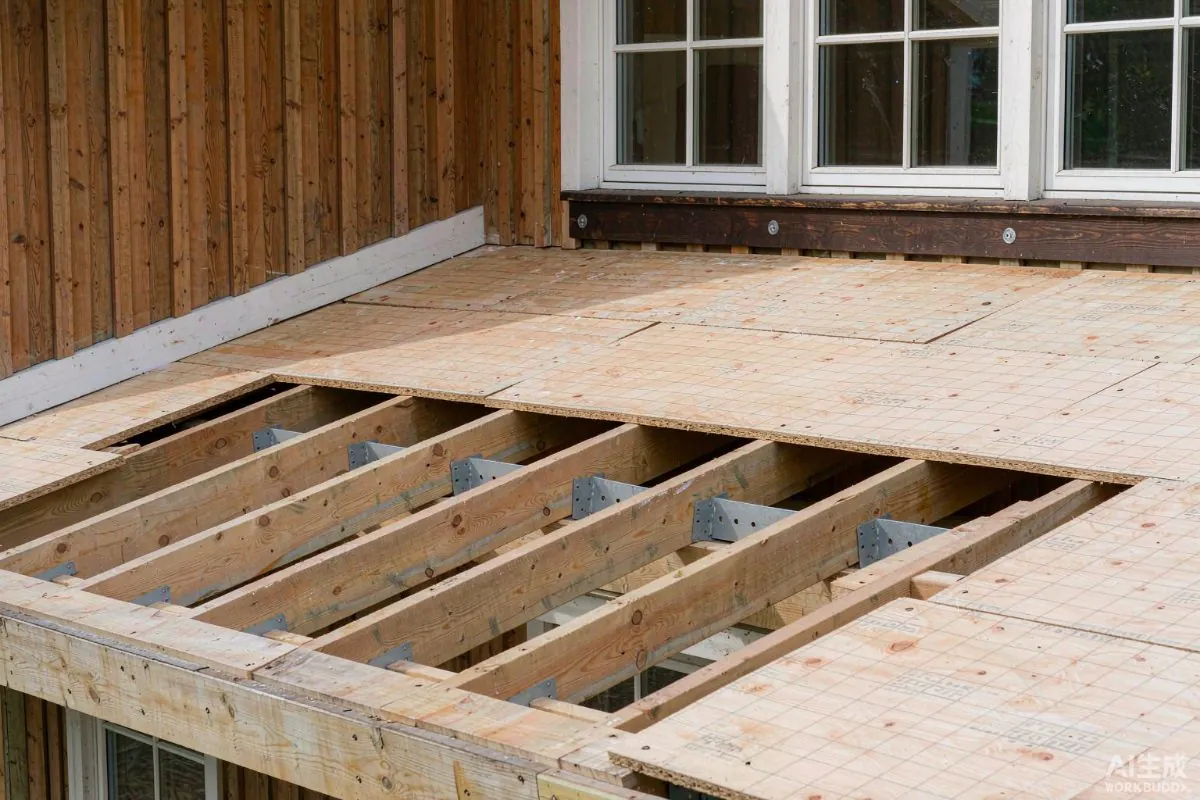
Installed deck replacement runs $2 to $5 per square foot, which is $64 to $160 for a single 4 by 8 panel. That spread is not really about the plywood. It spans two different jobs: a panel fitted while the roof is already open, and a panel fitted through a closed roof. In the first case the shingles are off and the framing is exposed. In the second, someone has to cut the covering back, replace the deck, then reinstate shingles, underlayment and flashing around a patch — and that reinstatement is most of the bill.
| Context | Typical figure | What the price covers |
|---|---|---|
| During a reroof, deck already open | $75 – $150 per sheet | Cut, fit, nail, and removal of the old panel |
| Standalone repair, roof closed | $200 – $600 per sheet | Shingle removal and reinstatement around the patch |
| Full deck, 2,000 sq ft | $4,000 – $10,000 total | 63 sheets; OSB at the low end, plywood at the high end |
| Installed, OSB | $2.00 – $3.50 per sq ft | Material, labour and disposal |
| Installed, plywood | $2.50 – $5.00 per sq ft | Material, labour and disposal |
Published ranges from a 2026 roof decking cost guide and from HomeGuide's $2 to $5 per square foot figure, as cited by The Roofing Brief. Ranges, not audited prices.
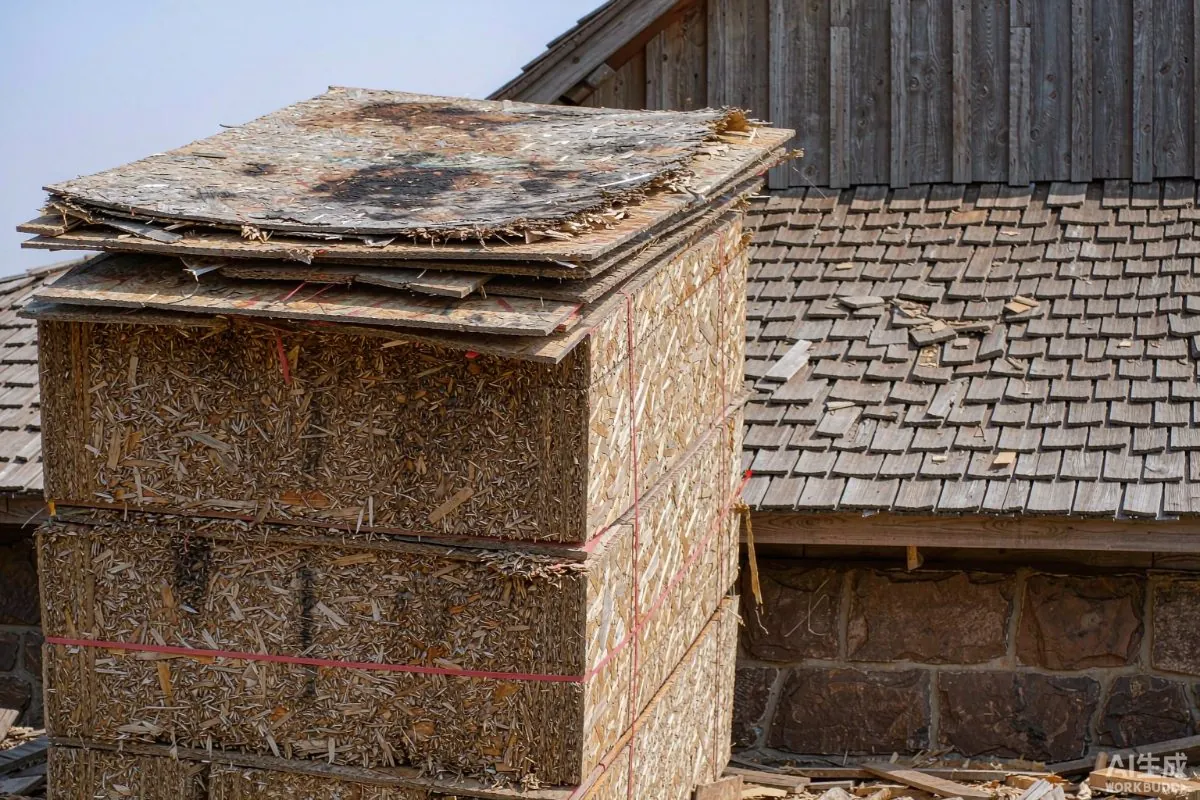
The number most homeowners actually need is smaller than any of those. On a typical reroof, 5 to 15 percent of the deck turns out to be bad — not the whole thing. The panels are marked during tear-off, because rot and delamination are hidden under shingles until the covering comes off. That is why a pre-purchase or pre-reroof roof inspection is worth paying for: it is the only chance to find out how much deck is at stake before the roof is open and the decision is no longer yours.
| Roof area | 5% bad | 15% bad | Sheets at 5% | Sheets at 15% | Cost at $75 – $150 a sheet |
|---|---|---|---|---|---|
| 1,200 sq ft | 60 sq ft | 180 sq ft | 2 | 6 | $150 – $900 |
| 1,700 sq ft | 85 sq ft | 255 sq ft | 3 | 8 | $225 – $1,200 |
| 2,000 sq ft | 100 sq ft | 300 sq ft | 4 | 10 | $300 – $1,500 |
| 2,400 sq ft | 120 sq ft | 360 sq ft | 4 | 12 | $300 – $1,800 |
| 3,000 sq ft | 150 sq ft | 450 sq ft | 5 | 15 | $375 – $2,250 |
Sheets are 4 by 8 panels rounded up. The cost column multiplies the low sheet count by $75 and the high count by $150, so it brackets the likely range rather than pricing one scenario.
Within that range, four things move the number. Panel thickness, because 5/8 inch costs more than 7/16. Access, because a panel at the ridge is quicker to fit than one beside a chimney or in a valley where the cuts are fiddly. Disposal, because the old panel has to leave the site and that is charged by weight or by the load. And H-clips or edge blocking, if the existing deck was built without them and the code in force requires them at replacement.
How to use the roof plywood replacement cost calculator
Seven steps, in the order the interface asks for them.
- Enter the damaged area, not the roof area. Add up the panels marked for replacement and multiply by their size. If you are still planning, use the 5 to 15 percent table above to bracket it.
- Set the sheet size. A 4 by 8 panel is 32 sq ft. Enter the real figure if you are buying 4 by 9 or 4 by 10, or if the deck is plank rather than panel.
- Choose a waste allowance. 5 percent suits a repair that follows the panel grid. 10 to 15 percent suits cut-up areas around valleys, chimneys and hips, where offcuts cannot always be reused.
- Enter the material price per sheet from your own supplier, for the thickness and grade you are actually buying.
- Enter the labour per sheet. Use $75 to $150 installed minus the material price for a panel fitted during a reroof, and a much higher figure for one fitted through a closed roof.
- Read the sheet count first, then the total. The sheet count is the number that matters for ordering, and it rounds up — you cannot buy two thirds of a panel.
- Check it against the market before you commit. If the total is well under $75 a sheet installed, the labour rate is too low for a 2026 quote. If it is over $600 a sheet, you are pricing a standalone repair rather than a reroof.
The formulas, and why the sheet count rounds up
sheets = ceil(area with waste ÷ sheet size)
material = sheets × cost per sheet
labour = sheets × labour per sheet
total = material + labour
per sq ft = total ÷ area
The ceil function is the whole calculator. It rounds any fraction of a panel up to the next whole one, because a supplier will not sell you 0.8 of a sheet and an offcut from the far end of the roof will not fit the hole you have. The per-square-foot figure at the end divides by the original area rather than the area with waste, so it describes the roof rather than the purchase.
Waste is worth understanding before you set it, because it does not behave the way people expect. It is a percentage of area, but the result is a whole number of sheets, so a small change in the allowance often changes nothing at all.
| Waste entered | Area with waste | Raw sheets | Sheets to buy |
|---|---|---|---|
| 0% | 400 sq ft | 12.50 | 13 |
| 5% | 420 sq ft | 13.13 | 14 |
| 10% | 440 sq ft | 13.75 | 14 |
| 15% | 460 sq ft | 14.38 | 15 |
| 20% | 480 sq ft | 15.00 | 15 |
| 25% | 500 sq ft | 15.63 | 16 |
A 400 sq ft repair in 4 by 8 panels. Going from 5% to 10% waste changes the area by 20 sq ft and the order by nothing at all, because both land inside the same panel.
That is why the allowance should be chosen for the shape of the repair rather than picked as a round number. A patch that follows whole panels needs almost none. A patch that weaves between rafters, valleys and penetrations needs more, not because material is lost but because the offcuts are the wrong shape for the next hole.
Worked examples
Example 1 — 320 sq ft of OSB during a reroof
- Inputs
- 320 sq ft, 8% waste, 32 sq ft panels, $22 material, $60 labour
- Area with waste
- 320 × 1.08 = 345.6 sq ft
- Sheets
- 345.6 ÷ 32 = 10.8 → 11
- Material
- 11 × $22 = $242
- Labour
- 11 × $60 = $660
- Total
- $242 + $660 = $902
- Per sheet installed
- $902 ÷ 11 = $82
- Per sq ft
- $902 ÷ 320 = $2.82
Eleven sheets at $82 each installed lands at the bottom of the published $75 to $150 range, which is where a straightforward panel-for-panel swap should sit. The material is 27 percent of the bill. If a quote for this job comes in at $200 a sheet, ask whether the shingles around the patch are being removed and reinstated — at that price it should be a standalone repair, not a reroof add-on.
Example 2 — 900 sq ft of plywood on a 2,400 sq ft roof
- Inputs
- 900 sq ft, 12% waste, 32 sq ft panels, $38 material, $95 labour
- Area with waste
- 900 × 1.12 = 1,008 sq ft
- Sheets
- 1,008 ÷ 32 = 31.5 → 32
- Material
- 32 × $38 = $1,216
- Labour
- 32 × $95 = $3,040
- Total
- $1,216 + $3,040 = $4,256
- Per sheet installed
- $4,256 ÷ 32 = $133
- Per sq ft
- $4,256 ÷ 900 = $4.73
This one is deliberately past a decision point. Nine hundred square feet is 38 percent of a 2,400 sq ft roof, and above roughly 30 percent most contractors stop patching and price a full deck instead — so the figure is useful as a comparison rather than as a quote. It also shows where the money sits at the top of the market: $4.73 per square foot, with labour at 71 percent of the total.
Patching or replacing the whole deck
There is a point where patching stops being the cheaper option, and it arrives sooner than most people expect. The labour to fit a panel is roughly the same whether it sits alone or beside twenty others, so the per-sheet price does not fall as the job grows the way it does in other trades. What does fall is the value of keeping the old deck: every additional patch leaves another joint, another thickness mismatch and another place where the next failure can start.
| Share affected | What happens | Why |
|---|---|---|
| Under 10% | Spot replacement, panel by panel | The normal reroof finding, and the cheapest route |
| 10% to 30% | Partial replacement, area by area | Cheaper than a full deck, if the quote itemises it |
| Over 30% | Full deck replacement recommended | Patch savings disappear, and one surface is easier to warrant |
The 30 percent threshold is a contractor convention rather than a code requirement, and it is applied to the panel count, not the roof area.
Above that line the comparison stops being deck versus deck and becomes deck versus roof. A 2,400 sq ft full deck at $4,000 to $10,000 is a large number on its own, but against a replacement roof it is a minority of the total, and doing it later means paying to open the roof twice. That is the calculation the repair versus replace comparison exists to settle, and it is worth running before you accept a change order on the day of the tear-off.
What the calculator leaves out
The deck is rarely the largest part of a deck repair. To reach it, the covering has to come off, and it may not be reusable. Underlayment, ice and water shield, flashing, drip edge and any battens are usually replaced at the same time, and the labour to strip and reinstate them often exceeds the cost of the panels by a wide margin. None of that is in this figure, and a contractor's per-sheet price usually excludes it too.
Where the deck has failed because of a long-standing leak, the leak still has to be found and corrected. Replacing panels under an unrepaired flashing detail simply resets the clock on the same failure, and the second one will be more expensive because the new covering has to come off as well. If the roof is open and water is entering the building, that is an emergency repair problem before it is a deck problem, and it should be priced that way.
At the eaves the deck meets the fascia, and the two fail together more often than either fails alone. Water that gets behind the gutter rots the deck edge and the fascia board behind it, so a deck repair along a gutter line usually turns into a fascia repair as well. The fascia replacement cost estimate covers that half of the job.
Assumptions and limitations
- The rates are yours. Panel prices move with the market and with grade, and labour varies by region. The defaults are a starting point, not a quote.
- Deck only. Covering, underlayment, ice and water shield, flashing, drip edge and disposal of the old shingles are all excluded.
- No structural repair. Rafters, trusses, blocking and sheathing repairs that need new framing are a different job with a different price.
- Uniform panel size assumed. A repair that mixes 4 by 8 with 4 by 9 will not tile exactly, and the calculator will under-count it.
- The count rounds up, always. A 13.1-sheet job is 14 sheets. That is correct for ordering and slightly pessimistic for budgeting.
- No minimum charge. A single-panel repair is usually priced with a callout minimum that is larger than one sheet's worth of work.
- No disposal cost. Old panels leave the site by weight or by the load, and that is not modelled here.
- Waste is not breakage. The allowance covers layout losses. Panels damaged on site or cut wrong are extra.
- The 5 to 15 percent planning range is a convention, repeated across contractor guidance, not a survey of your roof.
Frequently asked questions
Installed, $2 to $5 per square foot, or $75 to $150 for a single 4 by 8 panel during a reroof. Standalone repairs through a closed roof run $200 to $600 a panel, because the shingles around the patch have to come off and go back on.
Usually 5 to 15 percent of the roof area. On 2,000 sq ft that is 100 to 300 sq ft, or 4 to 10 panels. It gets marked during tear-off rather than beforehand, because rot and delamination are not visible while the covering is still on.
Yes, by a factor of three or more. A panel fitted while the roof is open runs $75 to $150 installed. The same panel fitted through a closed roof runs $200 to $600, because most of that price is removing and reinstating the covering around it rather than the panel.
Typically $225 to $1,500, which is 3 to 10 panels. That is the change-order figure most homeowners meet. On a 2,400 sq ft roof, 15 percent bad deck at $150 a sheet installed is about $1,800, which sits at the top of the usual range.
Because fitting is slower than buying. Each panel has to be cut around rafters, vents, valleys and hips, then nailed on the code schedule, and the old one has to come out and leave the site. Material is roughly a quarter to a third of the installed price.
Yes, if the damage is isolated and the surrounding deck is sound. Expect a callout minimum that exceeds the value of one panel's work. If several panels are soft rather than one, the cause is usually a leak that ran for years rather than a single event.
The arithmetic is identical; only the material price moves. OSB runs $2.00 to $3.50 per square foot installed and plywood $2.50 to $5.00. Plywood tolerates occasional wetting better, while OSB swells at the edges when it gets wet and does not return to its original thickness.
Match what is there, unless an assessment says otherwise. Thickness follows the rafter spacing and the panel's span rating, and IRC R803 governs it. A step between old and new panels telegraphs through the covering, so mixing thicknesses to save a few dollars is a false economy.
Above roughly 30 percent of the panels, most contractors recommend it. Fitting labour barely falls per panel on a bigger job, so the savings from patching shrink while the number of joints, thickness mismatches and future failure points keeps growing. It is a convention, not a code rule.
Only when the cause is a covered peril such as hail, wind or a fallen tree. Rot from age or a chronic leak is usually excluded as maintenance. The policy wording decides, and the photographs a roofer takes during tear-off are usually what the claim turns on.
Where these numbers come from
The sheet count is area arithmetic with a waste allowance, rounded up to whole panels. The panel size, thickness and span rating come from the manufacturer's stamp; the material price comes from your supplier and the labour from your contractor. No product or price is asserted as correct for your job.
The market ranges are published figures, not survey data. They are dated because decking prices have moved sharply more than once in the last few years, and a range from 2021 is not a guide to 2026.
- Roof Decking Guide, 2026 — the $75 to $150 per sheet during a reroof, $200 to $600 for an emergency spot repair, the $2.00 to $3.50 and $2.50 to $5.00 per square foot installed bands for OSB and plywood, and the 30 percent threshold for full replacement. Observed 15 November 2026.
- The Roofing Brief, Rotted Roof Decking — the 5 to 15 percent planning range, and HomeGuide's $2 to $5 per square foot installed figure, which this page cites at second hand rather than from HomeGuide directly.
- International Residential Code, Section R803 — R803.2.1 for panel manufacture to DOC PS 1 or PS 2 or an equivalent APA standard, R803.2.2 for panel edge support, and R803.2.3 for the fastener schedule. Thickness for a given rafter spacing is read from the span rating stamped on the panel, not assumed here.
- Panel manufacturer data and the APA span-rating stamp, which together set the thickness a given rafter spacing requires.
- Supplier pricing for the panel you intend to buy, and a contractor quotation stating whether stripping and disposal are included.
Replacing the whole deck rather than a patch?
Full-deck quantities follow the roof area, not the damaged area.